


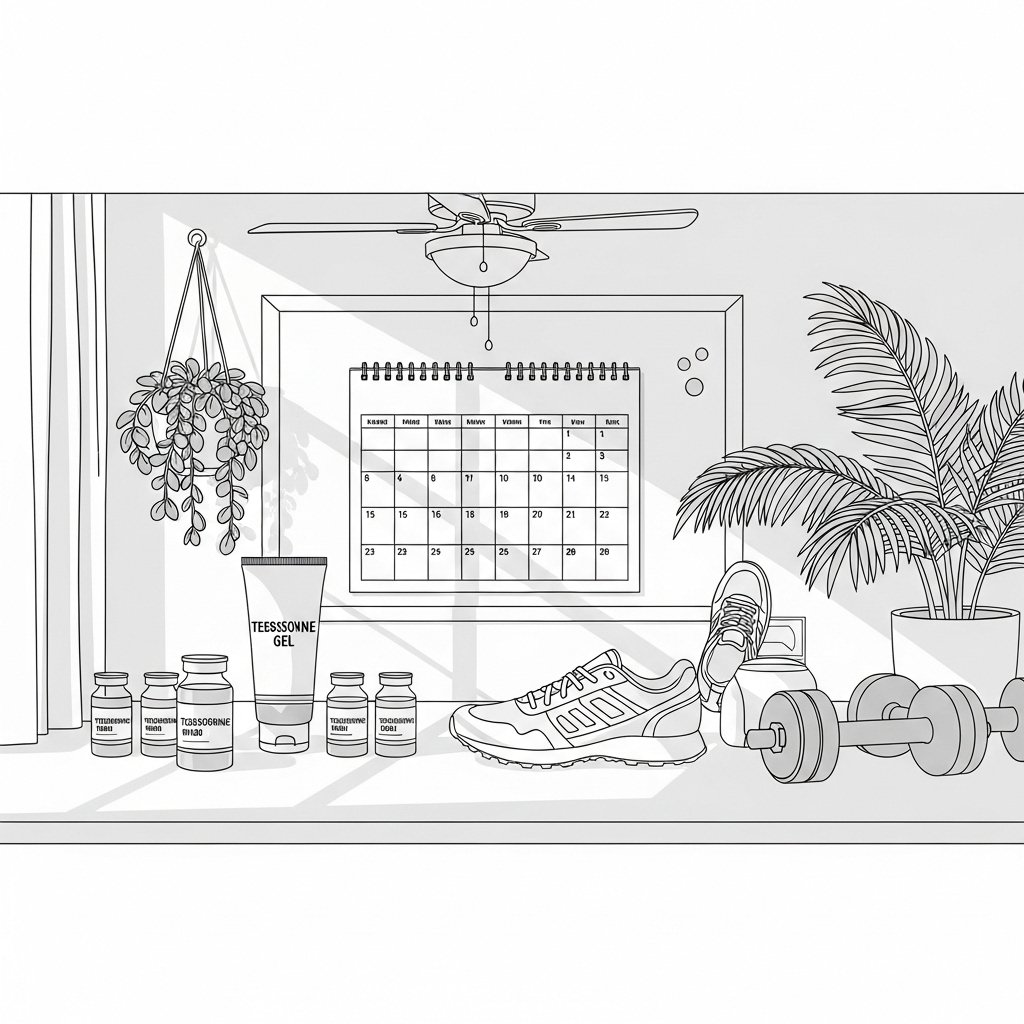
When men in Houston ask how long testosterone replacement therapy lasts, they are usually asking two questions at once. First, how soon will I feel better, and how long do those improvements persist? Second, how long am I likely to stay on therapy? The answers are personal, shaped by physiology, goals, and the practical realities of life along the Gulf Coast. Rather than offering a single timeline, a better approach is to map the phases of therapy—initiation, stabilization, and maintenance—onto your daily rhythms and health needs. As you consider the journey ahead, grounding yourself in the fundamentals of testosterone replacement therapy will help you set expectations that are both realistic and hopeful.
Every plan begins with evaluation. A thoughtful clinician will confirm a diagnosis with appropriate labs and context—time of day, sleep quality, and overall health can influence initial numbers. The intake also explores your symptoms, medical history, and goals. Some men want to restore focus and stamina for demanding work in the Energy Corridor, others aim to improve recovery for weekend cycling on Memorial Drive, and many simply want steady mood and better sleep. Clear goals inform the regimen you and your clinician choose together.
Onset of benefits: what changes first
In the first weeks, men often notice subtle shifts—better morning drive, more consistent mood, or a sense that workouts feel productive again. Sleep may deepen, and the afternoon slump may soften. These changes are encouraging because they signal that physiology is moving in the right direction. Over subsequent weeks, improvements in energy, libido, and mental clarity tend to build as hormone levels stabilize and downstream systems, like red blood cell production and neurotransmitter pathways, adapt.
Do not be surprised if the trajectory is uneven at first. Houston life is busy, and factors like late Astros games, early meetings, or weekend festivals can throw off sleep and nutrition. The goal in this phase is observing patterns, not chasing perfection. Your clinician will likely schedule follow-ups to review labs and fine-tune dosage, interval, or modality based on both numbers and how you feel.
Stabilization: finding your steady state
After the initial adjustments, most men enter a stabilization phase. Here, the aim is a repeatable routine that keeps labs within target ranges and symptoms steadily improved. If you are using injections, that may mean a dependable every-few-days cadence with site rotation and comfortable technique. If topical, it is about application routines that fit with Houston’s heat, workouts, and family life. For pellets, this is when your clinician assesses how long the particular formulation lasts for you and how your body responds as levels rise and fall across the implant cycle.
By this point, you will have a sense of how therapy fits into the rest of your health efforts—nutrition, exercise, stress management, and sleep. Men who pair therapy with these supportive habits often find that improvements not only persist but compound. Consistency breeds consistency, and your plan becomes a quiet backbone to daily life rather than a dominant focus.
Maintenance: the long view
The question of “how long” in the long view is really about whether therapy remains aligned with your goals and health profile over time. Many men stay on therapy for years because the benefits continue and the monitoring shows a safe, stable picture. Others pause during certain life events or reconsider if goals change. In the Houston area, practical considerations like job shifts, new commutes, or a move from inside the Loop to the suburbs can prompt adjustments in modality or scheduling without altering the overall arc.
Importantly, testosterone replacement is not a short course aimed at a one-time fix. It is a support strategy for a physiologic state. If you stop, your body’s baseline will return to where it was prior to therapy unless underlying causes have changed. That is neither good nor bad in itself—it is simply the nature of hormone physiology. Knowing this empowers you to plan confidently, whether you envision therapy as a long-term companion or something you may revisit after a different health priority is addressed.
Modality timelines and day-to-day realities
Different delivery methods have different practical timelines. Injections are flexible, allowing rapid adjustments during the first months and reliable maintenance once calibrated. Topical gels are steady-state tools that work best when daily routines are consistent and transfer precautions are second nature. Pellets are longer-acting, with cycles that span months and fewer daily decisions. None is universally superior; the best choice is the one you can sustain comfortably given your schedule, preferences, and response.
In Houston’s climate, think through details that influence routine. With topicals, morning application followed by sufficient drying time fits well for many men, especially when paired with light shirts during hot months. With injections, consider storage away from heat and safe disposal plans. Pellet users should plan implantation dates around travel and heavy workouts, giving the site a few days of easier activity.
How labs guide the clock
Lab timing creates the tempo for your plan. Early on, you will likely have checks to see where levels land relative to dosing and to keep an eye on safety markers such as red blood cells and estradiol. Once steady, the interval between labs typically lengthens, but the cadence remains regular. If your schedule changes—new job hours, shifts in workout times—tell your clinician. Adjusting lab timing to match your routine keeps the data honest and the plan precise.
In a city where traffic can turn a twenty-minute drive into an hour, choosing lab locations and appointment times wisely keeps therapy on track. Many men aim for early morning draws near work or along the commute. Some clinics offer in-house labs with flexible hours, a welcome perk that reduces the chance of missed checks.
Life events that reset the timeline
Certain life events effectively “reset” parts of the therapy timeline. Significant weight changes, new medications, a diagnosis like sleep apnea, or a major change in stress can shift how your body responds. In these moments, expect your clinician to revisit dose and sometimes modality, then move through a brief recalibration before returning to maintenance. Houston-specific events like storm-related disruptions can also cause short pauses. A plan with contingencies—telehealth visits, flexible lab rescheduling—absorbs these bumps with minimal consequence.
If you are planning for fatherhood, timing matters as well. Because testosterone can suppress sperm production, discuss family-building goals early. Your clinician can outline strategies that preserve options, including potential pauses or supportive medications, and the timing that makes sense for your household.
Measuring persistence: beyond numbers
Longevity of benefit is best measured by your lived experience, not just lab values. Ask yourself: Is my energy steady through Houston’s long workdays? Do I recover well after Saturday yard work in August heat? Am I sleeping better, thinking more clearly, and showing up with more patience at home? These are the signals that therapy is doing its job. Share them at follow-ups. Your clinician will pair them with numbers to confirm that you are not only within therapeutic ranges but thriving within them.
The middle check-in that keeps you on course
Around the midpoint of your first year, many men benefit from a deliberate review. Revisit goals, assess habits, and decide whether modality or interval still fits. This is also a good time to refresh your understanding of the essentials of a patient-centered TRT approach. Small course corrections here—adjusting injection day, refining gel application, or moving labs to a more convenient location—tend to pay outsized dividends in year two and beyond.
As you settle into maintenance, therapy often becomes background music to a healthier life. You will likely forget the exact date you first noticed more consistent mornings or better workouts; you will simply expect them. That is a good sign. The plan is integrated, not intrusive.
Frequently asked questions
How soon will I feel better after starting? Many men notice early improvements in the first weeks, with steadier benefits unfolding over subsequent months as dosing is calibrated and sleep, nutrition, and training align.
Can I try therapy for a short time and stop? You can, but understand that stopping usually returns you to your pre-therapy baseline. Short trials are most informative when done under close supervision with clear goals and follow-up.
Do certain delivery methods last longer? Pellets provide longer intervals between clinical touchpoints, while injections and gels offer more flexibility for quick adjustments. The right fit depends on your preferences and how your body responds.
What if I change jobs or move across town? Expect a brief recalibration. New routines may change lab timing or dosing preferences. Good communication with your clinic smooths the transition, and telehealth can help bridge gaps during busy weeks.
Will I be on TRT for life? Many men choose long-term therapy because the benefits endure and safety monitoring remains stable. Others pause during specific life seasons. The decision is personal and revisited periodically with your clinician.
How do I keep benefits strong year after year? Consistency with dosing, labs, and lifestyle habits is key. Sleep, nutrition, movement, and stress management amplify therapy’s effects and keep adjustments minimal.
Your next step in Houston
There is no single expiration date for the benefits of a well-run plan. The timeline adapts to you, and with the right partnership, it can support your health for as long as it aligns with your goals. If you are ready to map out a path that respects your schedule, your household, and your ambitions, start a conversation about testosterone replacement therapy so you can move forward with clarity and momentum.